Month-End Reconciliation Checklist for Finance Teams
Use this month-end reconciliation checklist to freeze scope early, route exceptions by owner, and hand reviewers a cleaner sign-off package.
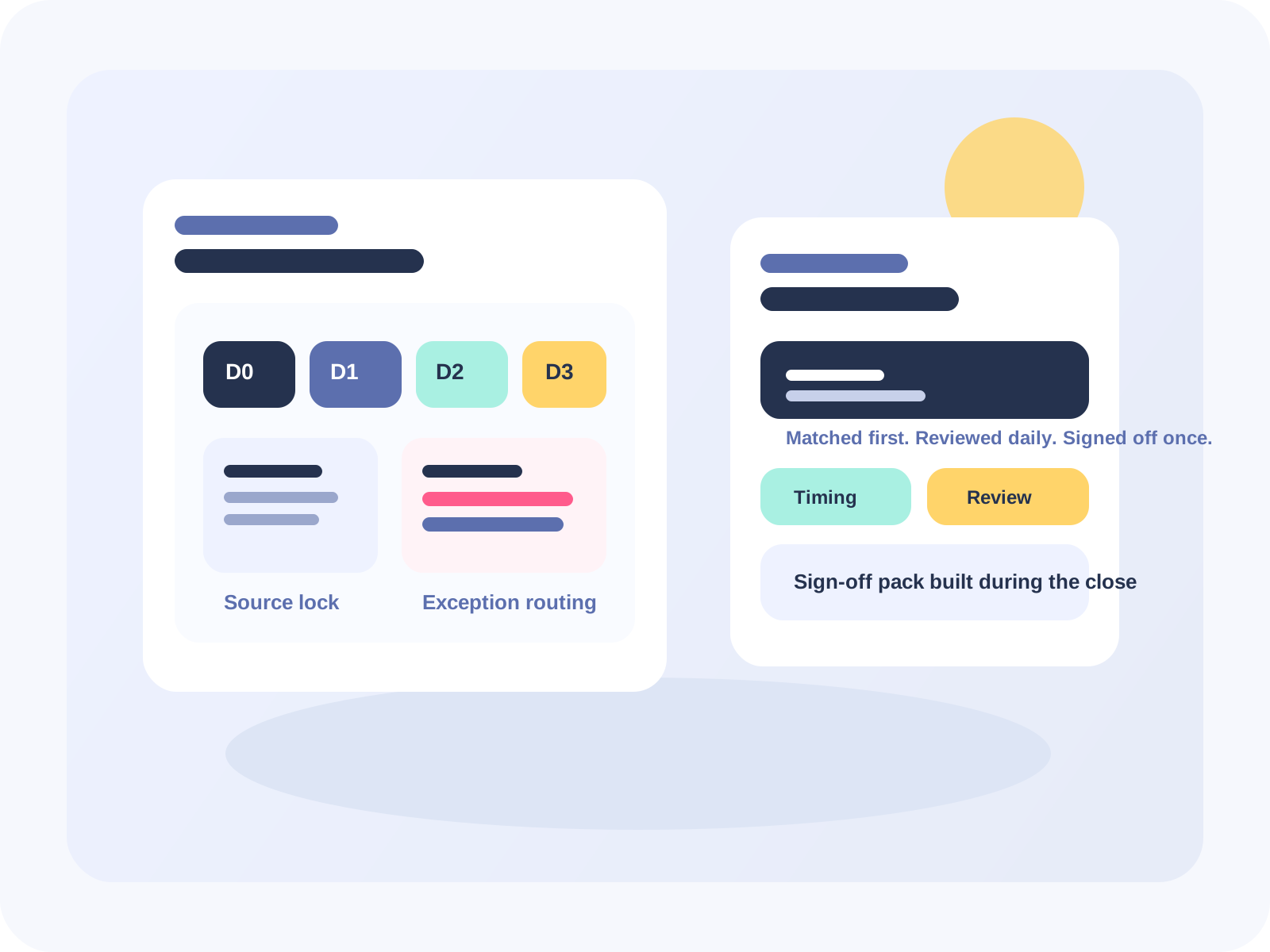
A month-end reconciliation checklist should control the close before the close starts controlling the team. The goal is not just to finish account matches. The goal is to freeze scope early, move the highest-risk accounts first, route exceptions with owners, and leave behind a sign-off package that survives handoff.
This version is designed for teams reconciling Excel and CSV exports. It assumes the source systems do not always line up cleanly and that the review pack must work for controllers, auditors, or anyone stepping in late during close.
TL;DR: the month-end controls worth enforcing every cycle
- Lock the source files, cut-off date, and key account list before Day 1 work starts.
- Run the highest-risk or highest-volume reconciliations first, not last.
- Use clear exception statuses with one owner and one next step per item.
- Separate timing differences from actual data breaks immediately after the first pass.
- Build the sign-off pack as you go instead of rebuilding it on the final day.
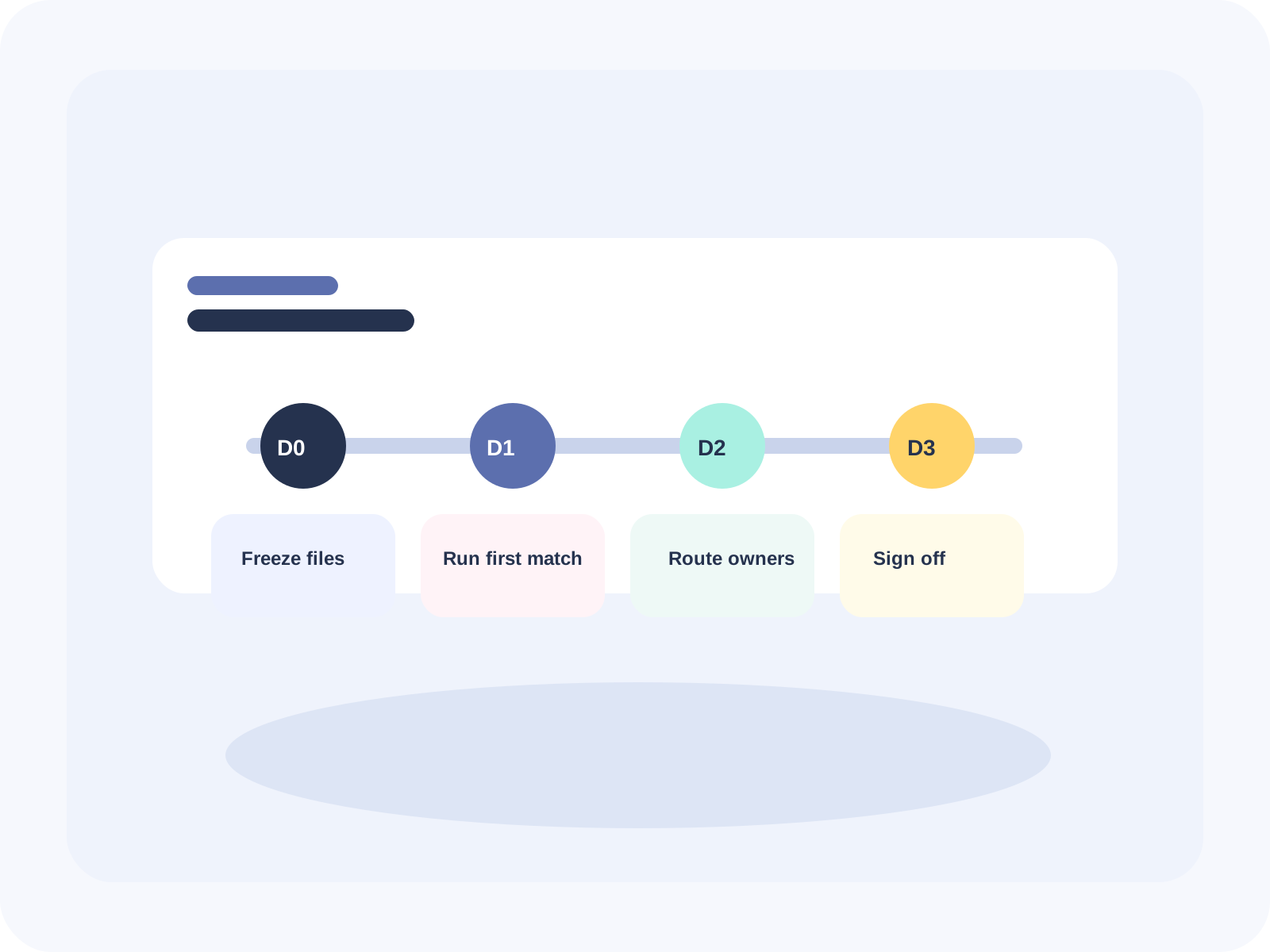
1. Freeze scope before Day 1 starts
The checklist should define which files are in scope, what the cut-off date is, and who owns each account before matching begins. Otherwise the close keeps changing shape midstream. A late file becomes a reason to rerun everything. A renamed column becomes a surprise. A missing owner becomes a parking lot item that no one resolves.
Scope freeze does not mean the world stops moving. It means the team records what is in the current run and treats anything later as an explicit update, not as silent workbook drift.
2. Reconcile high-risk accounts first
Teams often delay the hardest reconciliations because they feel messy. That is backwards. Bank accounts, clearing accounts, payment platform exports, and high-volume operational feeds should move first because they generate the longest exception queues and the most follow-up traffic.
The checklist should rank accounts by risk, volume, and downstream dependency. If another close activity cannot finish until a file is matched, that reconciliation belongs near the front of the calendar, not at the end.
3. Route exceptions with one owner and one due time
Every open item should have a status, owner, and expected next action. A timing difference that needs tomorrow's bank file is different from a ledger posting that accounting must fix today. Month-end slows down when those cases live in the same unnamed queue.
The Journal of Accountancy has highlighted the value of daily close coordination and checklist-based controls. That discipline matters even more when reconciliations depend on exported spreadsheets rather than on a single source system.
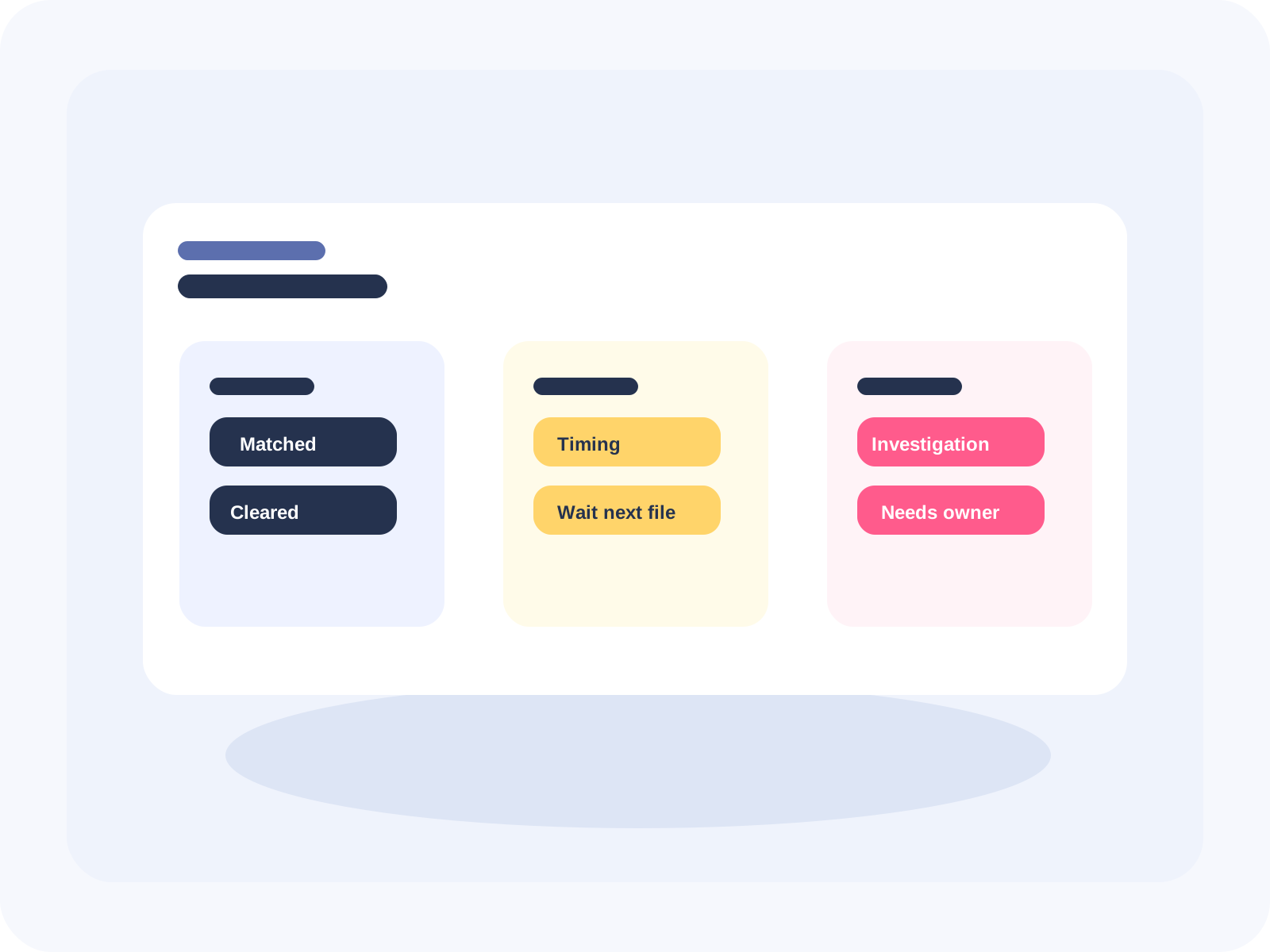
4. Separate timing differences from actual breaks
Timing items are normal. Duplicate exports, wrong sign rules, text-formatted amounts, or missing rows are process problems. The checklist should force that distinction on the first review pass. If not, the team loses time arguing over items that only look strange because the files were not prepared consistently.
This is where FireLookup helps. The workflow makes matched and unmatched output visible in one place, which makes it easier to decide whether a row belongs in timing follow-up or true investigation.
5. Build the sign-off pack while you reconcile
A good month-end pack includes the source files, the match result, the exception log, the summary, and reviewer notes. Build those artifacts as the work happens. If the team waits until the final day to assemble them, the close turns into memory reconstruction.
The best checklists are short enough to repeat every month and strict enough to prevent last-minute surprises. That usually means fewer formulas, clearer statuses, and a more direct handoff into review.
Where FireLookup shortens the close
- It keeps the source files unchanged while the comparison logic happens in a guided flow.
- It supports exact, fuzzy, and grouped matching for accounts that do not reconcile one row to one row.
- It makes matched and unmatched rows visible together, which speeds up exception routing.
- It exports an audit-ready package that is easier to review than a workbook full of copied helper columns.
FAQ
What should every month-end reconciliation checklist include?
At minimum: scope freeze, source ownership, account priority, exception statuses, reviewer handoff rules, and sign-off pack requirements. Those controls matter more than a long list of generic close reminders.
How early should exception review start?
As soon as the first match output is available. Waiting until every account is processed creates one large queue with no prioritization, which is exactly what makes the final days of close feel chaotic.
When is a spreadsheet-based close too fragile?
When repeated reruns, grouped matches, and late file changes force one preparer to explain the workbook live every month. That is usually the point where the team needs software for the comparison step, not more hidden tabs.
Further reading
Journal of Accountancy: building blocks of a successful financial close
A useful reference on checklist-based controls, close coordination, and process discipline.
AccountingTools: how to reconcile a bank statement
A practical overview of bank rec steps, timing items, and the documentation auditors expect to see.
Microsoft: large data sets and Excel grid limits
Helpful when close files are pushing beyond what a single worksheet can safely display or preserve.
Explore FireLookup
Review the errors that inflate exception queues
Catch the file issues that make month-end matching look harder than it should be.
See the FireLookup reconciliation steps
Follow the workflow from upload through review and export.
Use support guidance during close
Find answers on uploads, billing, audit trail questions, and account help.
Explore more
More spreadsheet reconciliation resources
Explore pricing, reconciliation guides, and support resources for teams comparing Excel and CSV files with an audit trail.